
Projects
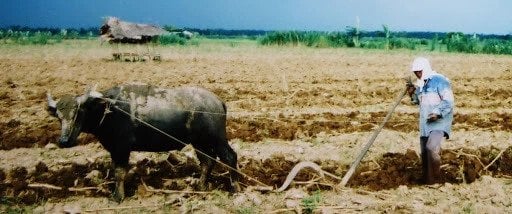
Across Negros Occidental, Leyte, and Dinagat Islands, Kaisahan works alongside farmers, fisherfolk, women, and youth to build rural communities that are food-secure, climate-resilient, and able to claim and defend their rights to land. Our current projects tackle two connected fronts of that work: building sustainable, circular local food systems through SAGUP Food Circles, and strengthening access to justice for land and human rights defenders through the Land Justice Initiative.
SAGUP Food Circles
Propagating agro-aqua green enterprises and community food circles for sustainable and climate-resilient local communities in Negros Occidental, Leyte, and Dinagat Islands
Development goal: SAGUP Food Circles envisions a future where food is valued, livelihoods flourish, and communities thrive — building circular food economies where every harvest is maximized and every surplus is valued, by reducing food loss and waste, enhancing production, and fostering collaboration among stakeholders.
The problem: The Philippines discards an estimated 2.9 billion kilograms of food annually. For farmers and fisherfolk in Negros Occidental, Leyte, and Dinagat Islands — already among the areas hardest hit by Typhoon Odette, which contributed to Php 13 billion in agriculture and fisheries losses in 2021 — that waste means lost income on top of climate vulnerability.
Objectives
- Strengthen community resilience by creating a Food Circle network for sustainable food production and waste management across 9 cities/municipalities in 3 provinces.
- Empower communities, especially women and youth, through sustainable agriculture, post-harvest fisheries, value addition, and agro-enterprise clustering to enhance livelihoods and access to support services.
- Influence policies to reduce food loss and waste, promote sustainable food practices, and integrate these into climate mitigation and disaster risk reduction plans.
What Kaisahan is doing
- Establishing SAGUP Centers — hubs for food rescue, redistribution, and waste conversion, inspired by SAGUP Negros. Target: 10 centers across 9 cities/municipalities. Activities: food rescue, processing, and community feeding.
- Organizing 38 Agro-Enterprise Clusters (AECAs) of farmers, fisherfolk, and women to grow, process, and market rice, vegetables, coconut, fish, and other focus crops sustainably, for lower production costs, better market access, and reduced waste.
- Training women and youth — women will lead Village Savings Associations; youth will manage SAGUP Centers and drive local awareness campaigns. Training covers sustainable farming, post-harvest processing, and disaster resilience.
- Advancing policy advocacy with local governments to integrate food loss and waste reduction into disaster risk reduction and climate change policy, including the proposed Zero Food Waste Act and barangay-level food waste management ordinances.
- Running social and behavior change communication (SBCC) campaigns to promote sustainable consumption and waste reduction, reaching a target of 5,000 individuals through workshops, social media, and community events.
Coverage area: Negros Occidental (Bacolod City, Kabankalan City, Victorias City, San Enrique, Cauayan), Dinagat Islands (Tubajon and Libjo), and Leyte (Alang-alang and Kananga) — 9 cities/municipalities across 3 provinces.
Target groups: Farmers, fisherfolk, and women, with particular focus on women- and youth-led enterprise.
Partners: Kaisahan and the Negrosanon Young Leaders Institute (NYLI), with funding support from the European Union.
Land Justice Initiative (LJI)
Amplifying land rights defenders' access to justice and uniting stakeholders for land rights accountability.
Development goal: The Land Justice Initiative aims to enhance access to justice, legal protection, and institutional support for Land and Human Rights Defenders (LHRDs) through capacity building, policy advocacy, and investigative monitoring.
The problem: Land and human rights violations have escalated in the Philippines, with Negros Occidental and Leyte identified as hotbeds of abuse, particularly against land rights defenders. The Commission on Human Rights (CHR) in Negros Occidental reported that of 81 cases documented in 2022, 64 were extrajudicial killings, with 34 caused by land issues and armed conflicts. LHRDs — individuals and groups protecting land and livelihood rights against structural, commercial, or developmental threats — are among those most at risk, facing threats, harassment, intimidation, and violence.
Outcomes
- Outcome 1 — Capacity building and enhanced monitoring:
- A Land and Human Rights Investigative Monitoring and Reporting Toolkit for use in LHR investigation and monitoring.
- Trained LHR investigators from Negros Occidental and Leyte provinces and partner CHR staff from the re-established Negros Island Region, Region 8, and Central Office.
- LHR case reports from Negros Occidental and Leyte provinces.
- Outcome 2 — Legal support and protection:
- An LHRD Support Program established with different stakeholders for legal and other protection services in Negros Occidental and Leyte.
- CHR Land and Human Rights Desks, and mobile and online help desks, in Negros Occidental and Leyte.
- An LHR Victim Protection Assistance Fund for Negros Occidental and Leyte.
- An LHRD multistakeholder platform per province for dialogue, case review, and referral for action.
- Outcome 3 — Policy engagement and advocacy:
- Philippine Land and Resource Conflict Monitoring Reports (PH LRCM).
- Policy proposals supporting LHRDs (e.g., the UN Guiding Principles on Business and Human Rights National Action Plan, the HRD Bill, the AVA DAR Administrative Order, and the PNP Operational Manual).
- Increased engagement with key government stakeholders through policy inputs and dialogue, and greater public awareness and support for proposed policies protecting LHRDs.
Coverage area: Negros Island Region (formerly part of Region 6) and Region 8, particularly Negros Occidental and Leyte provinces.
Target groups: Land and Human Rights Defenders (LHRDs), including women defenders; barangay justice mechanisms; and the Commission on Human Rights (CHR).
Partners: Kaisahan and the Asian NGO Coalition for Agrarian Reform and Rural Development (ANGOC), with funding support from the European Union through the European Commission in the Philippines.